Reflections on the Fire Born series: you don’t have to be mad to berserk here, but it helps
I’ve been thinking recently about my five-book Fire Born Viking series – and what the hell it was actually all about
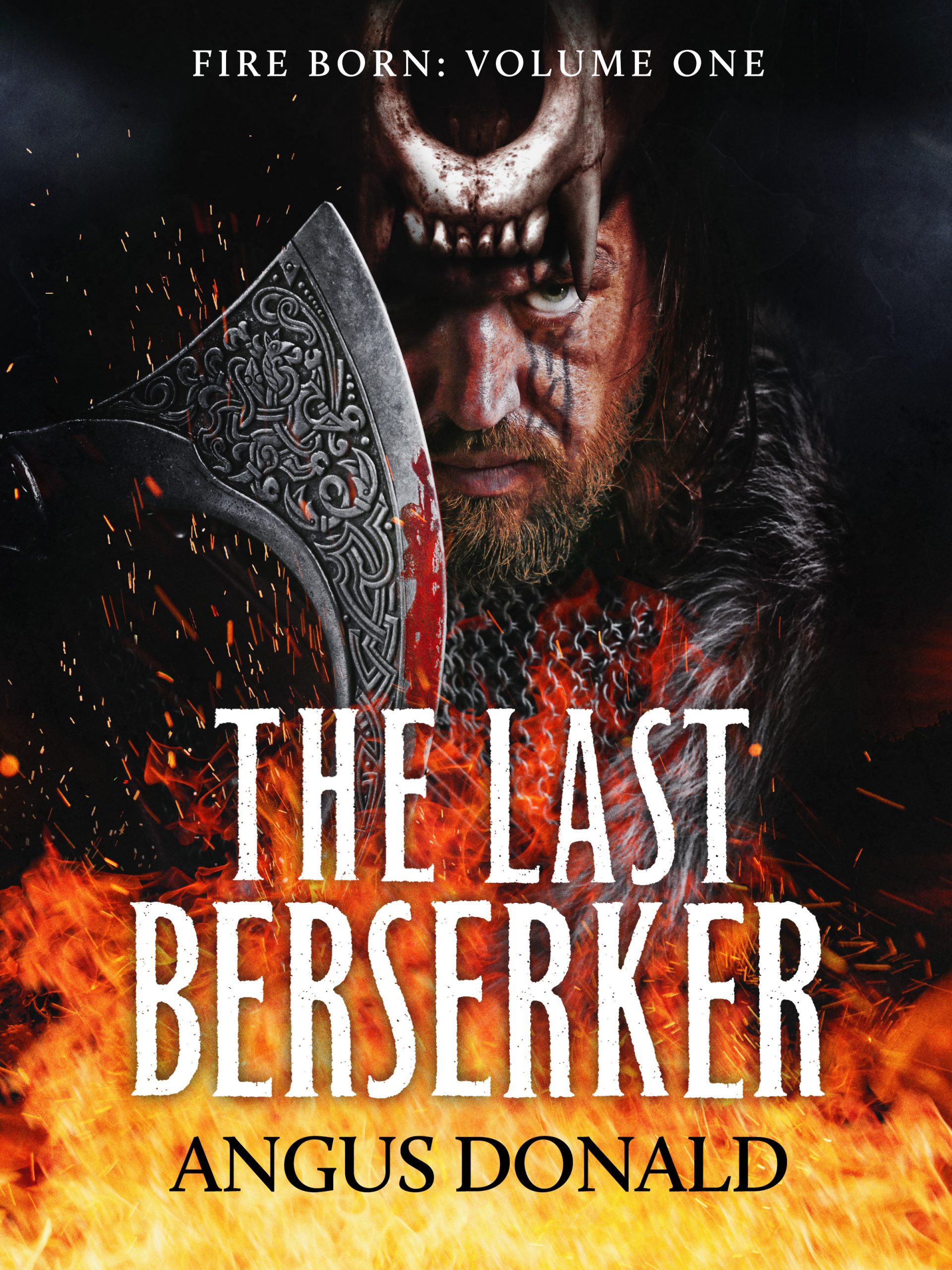
A couple of years ago I completed the final novel in my five-novel Fire Born series. It is a bloody Viking saga of bears, berserkers and battle, and I genuinely loved writing it. I drew heavily for the novels on my own experience as a young anthropological researcher in Indonesia in the 1980s – more about that in another post – during which on several occasions I watched people, under the influence of religion and music, become apparently “possessed” by the spirits of wild animals and legendary heroes.
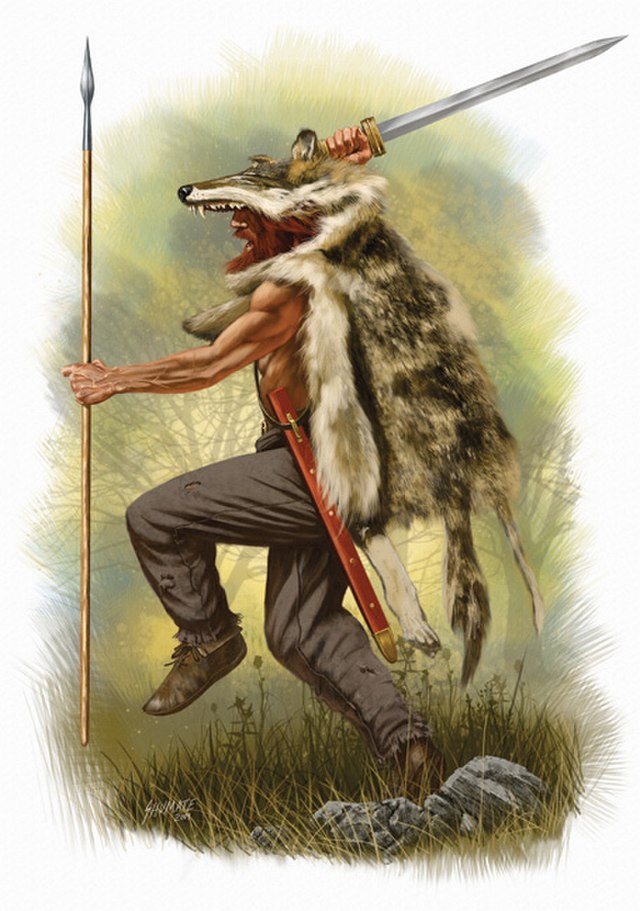
I used these 20th-century anthropological insights to inform my writing about 8th-century berserkers, who also believed that were inhabited in battle by the spirits of bears, wolves (see pic below) or wild boar. This kind of possession, Viking berserkers believed, gave them superhuman strength, speed and agility and immunity to pain from their wounds. And the certainty of a glorious afterlife feasting with heroes in Valhalla when the battle was over.
After this blood-soaked series was concluded – and it’s not for the faint of heart – I began to wonder, well, what the hell it was actually all about. I often find, and maybe all creatives do, that a submerged part of my mind, a part that I am not wholly in control of, is in the driving seat when it comes to my characters and their actions. Sure, I plan out a story and research the history but the themes and moods and underlying psychology of the novel all spring from my sub-conscious. And I think that the Fire Born series, which began with The Last Berserker, in 2021, is actually about madness.
There are SPOILERS ahead, so if you haven’t read any of the Fire Born books yet beware. But, if you don’t mind that, then this is my take on the main themes and underlying meaning of the series.
The Last Berserker
Bjarki Bloodhand and Tor Hildarsdottir, two young warriors from Scandinavia, both desperately want to become berserkers. These frenzied fighters (who really existed, by the way) are the elite warriors of their late 8th-century North European world, the Special Forces of their day. In order to become a berserker (or Fire Born as I call them), you have to go through a series of harsh tests and ordeals, but most importantly you have to invite the spirit of a wild animal (a bear, wolf or boar) called a gandr to possess you.
Spirit possession is a phenomenon which is recognised in the Bible and is still practised today in many parts of the world – from Christian Baptists meetings in the Deep South to Hindu temple dancers in South East Asia.
It is, in my view, a kind of socially sanctioned madness. Spirit possession does something to the human mind, something not fully understood, that alters the perceptions of the possessed. The possessed often behave oddly, sometimes seeming to harm themselves without feeling pain – being bitten by snakes, for example, or walking on red-hot coals. In rural Malaysia today, there is a phenomenon called running “amok” in which a villager goes completely tonto and starts killing all the people around him. The only thing to do is to band together and kill the person who has run amok. Malays say that the amok-sufferer is possessed by the spirit of a tiger.
Anyway, Bjarki manages to become a berserker in Book 1. Tor, his half-sister, to her initial regret, does not. Thus begins Bjarki’s long descent into blood-soaked madness, painfully witnessed by his beloved half-sister Tor.
The Saxon Wolf
Bjarki soon realises that being a berserker, with all the enormous destructive power that it grants him on the battlefield, is not wholly desirable. He cannot control what he does in his berserk state (in which he has enhanced strength and ferocity). A berserker, in the lore of my novels, sometimes goes completely crazy and kills everyone round him, even the people he loves. Bjarki very nearly kills Tor and does actually kill his girlfriend at the end of The Saxon Wolf. He feels horribly ashamed of his actions, even though it is not his fault. He was not in control of his actions when the gandr takes control of his body.
The Loki Sword
Bjarki seeks to rid himself of his gandr (in this case, the spirit of a mother bear) at the beginning of The Loki Sword. He sees the possessing she-bear as evil, and she is certainly bloodthirsty, and he seems to manage this Dark Ages exorcism successfully. He has an antagonistic relationship with the gandr, which is resolved in the end of the book when the gandr helps Bjarki survive a battle and Bjarki returns the favour and saves the mother bear’s real-life cub from a huntsman’s trap.
The she-bear and Bjarki now get on well – but Bjarki is spending more and more time in the Spirit Realm meeting the bear gandr and talking with her. He is slowly going mad. This is not revealed in the book but there is no Spirit Realm, in reality, and no bear gandr. It’s all happening in Bjarki’s head.
King of the North
Bjarki seems to be getting better. The gandr is quiet most of the time, and when Bjarki does unleash her, during a rescue of a Saxon princess, it is a well controlled release. The real bear cub has grown up now and is a tame but dangerous companion of Tor’s. Bjarki is still having conversations in his head with the she-bear. However, when the bear cub is killed in battle, the she-bear asks Bjarki to save him by allowing his spirt to enter him as a gandr. At the end of King of the North, Bjarki is possessed by two spirits.
Blood of the Bear
In the last book in the series, Bjarki’s slide into madness is accelerated by a “magical” attack. One of his enemies uses seithr (sorcery) to send him mad and, over the course of the book, he becomes ever more mentally ill and disassociated from the real world.

Bjarki still continues to play his role as an elite, highly respected Viking warrior, but in the final battle, when he goes berserk for the last time in one great glorious bloodletting, he finally succumbs to his growing madness and is slain.
I realise now that the Fire Born series is a tragedy. Maybe it’s not quite King Lear, but it’s the tragic story of an ordinary man who strives to achieve greatness and by achieving it dooms himself to madness and death.
My daughter Emma asked me at dinner the other day, why my books are always so sad. And to be honest I couldn’t find a good answer. Maybe because sad stories are more moving, more dramatic. Maybe it is just because life is tragedy. All lives, even the most glorious and successful, end in death. And Bjarki’s life was indeed glorious – and he was happy for a time, too. He pursued his dream and achieved it, which is something.
The other theme which emerged for me as I was writing the Fire Born series is that there is great power in madness. The “madman” principle in geopolitics has been widely written about – when a world leader is viewed as unstable, capable of anything, other statesmen treat him warily, and this gives him an advantage. There is also the schoolyard power of the mentally ill. Begby, the terrifying character from the movie and novel Trainspotting, is a total “bampot” in the Scots argot – a madman. Everyone is frightened of him because of his wildly unpredictable violent behaviour.
Madness gives you power over others. But it is only a short-lived power. In the end, like the villagers in Malaysia, the sane must all band together and kill the madman. And berserkers, too, while they must have been magnificent and utterly terrifying in warfare, rarely survived the battle.
The Last Berserker (Fire Born 1), along with the other four books in the Fire Born series, is available as an eBook, paperback and audio book from Amazon and other retailers. (And it’s not all doom, gloom and gore – there are funny, and even happy bits, too.) And if you enjoy the series, please leave a short review on Amazon or elsewhere.
Comments (2)