The Battle of the Boyne – a few thoughts and observations
I’ve been really busy over the past few weeks finishing off “Robin Hood and the Holy Grail”, the 12th and final Outlaw Chronicles adventure, and I’m nearly ready to publish. But my full schedule has meant that I have neglected my blogging. So, since there will be a number of Orange marches in parts of the United Kingdom this weekend, I thought I’d repost this blog from a few years ago.
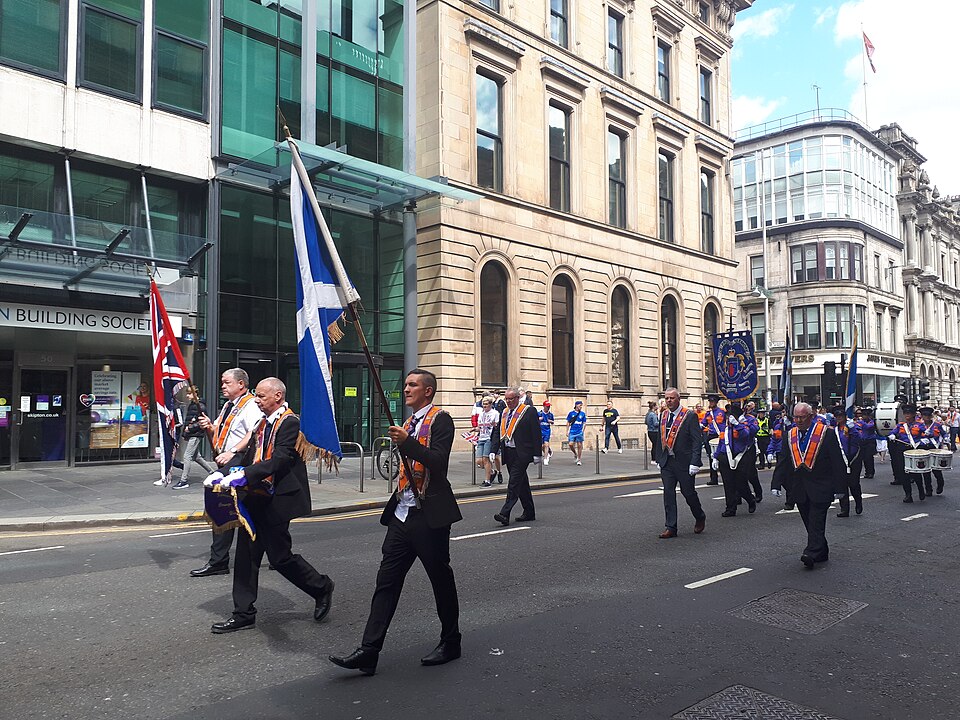
We’ve all seen them on TV, in the newspapers and on social media: burly men, grim faced, marching in their ranks, hundreds strong, in sober suits, prim white gloves, bowler hats and bright V-shaped sashes; fifes tootling; drums rattling, batons twirling and huge patriotic banners waving overhead.
I remember as a teenager in my parents’ house in Kent seeing the Orangemen on the Nine O’clock News and thinking, what is that about?
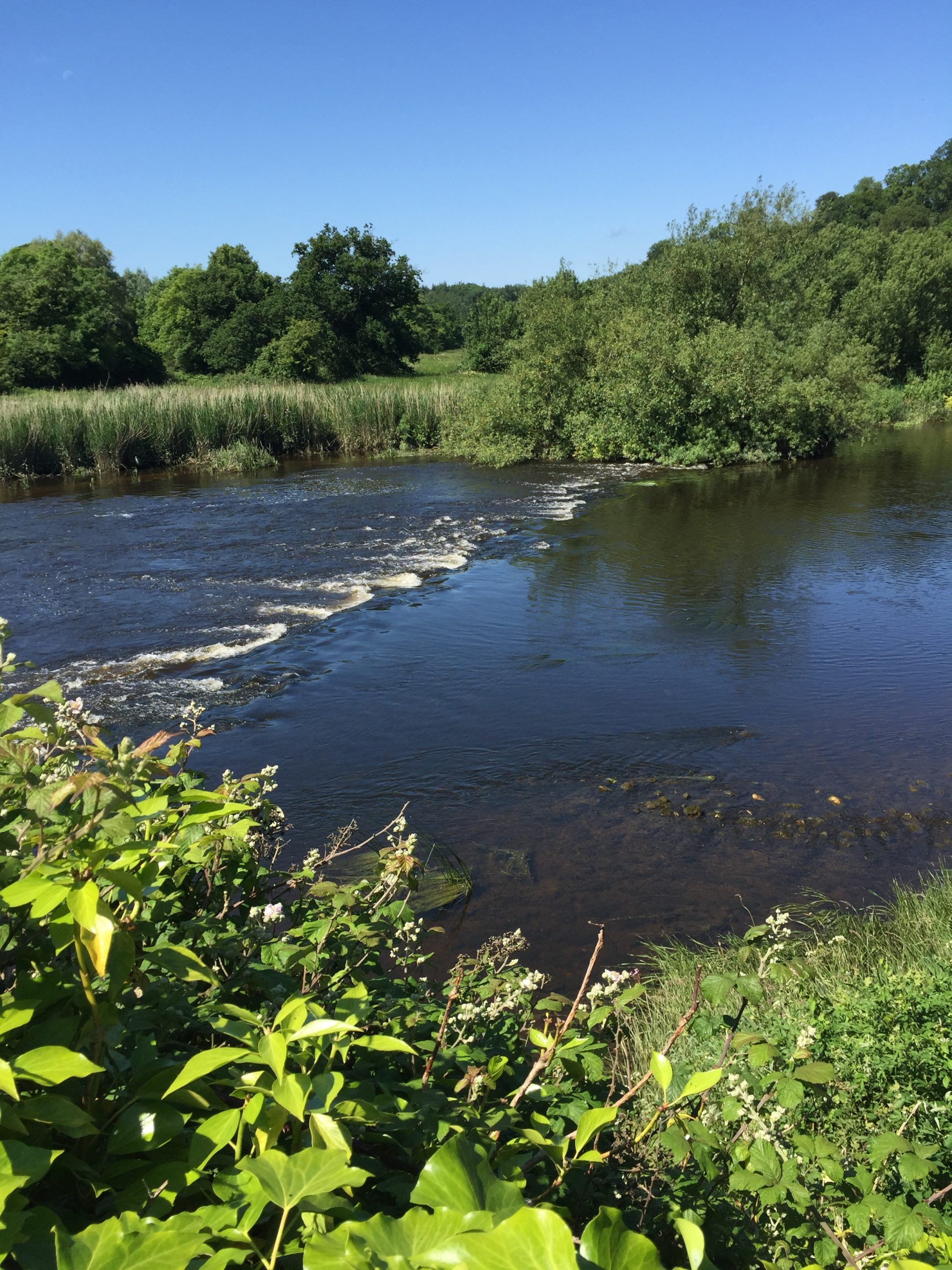
Then I read some history, got a better grip on politics and began to understand what these men – few women were visible – were all about, and to disapprove, as the young unthinkingly tend to do when confronted with alien customs. They were marching to celebrate the Protestant victory at the Battle of the Boyne, the struggle in July 1690 between William of Orange and James II on the bank of a slow running, peat-brown river in Ireland (below) a few miles west of Drogheda, for mastery of the British Isles.
I didn’t think about it much for another forty years. The impression that remained was, roughly, this: Battle of the Boyne – Protestant English army triumphs over Catholic Irish; terrible slaughter by the riverbank that wrecked the hopes of the Stuart dynasty for all time in one decisive day.
It was only when I began to research the historical background to Blood’s Campaign, the third book in my trilogy about the brilliant but unusual artillery officer Holcroft Blood (a distant relative of mine) that I realised almost everything I had assumed about the battle was wrong.
It wasn’t just the English against the Irish: King William’s army (about 36,000 strong) had many English regiments, of course, but also units recruited from Ulster and large numbers of Dutch troops, including his famous Blue Guards, perhaps the best troops in Europe at the time. He also had Danish, German and Huguenot contingents.
King James’s army (roughly 24,000 men) contained about 7,000 Frenchmen. And there were Catholics and Protestants on both sides.
Moreover, the Boyne wasn’t a decisive military encounter. In fact, and I discovered this, foolishly, after I had begun writing the novel, it wasn’t even a particularly important battle, in the wider scheme of things.
Compared to the massive conflicts in mainland Europe between Louis XIV, the despotic Sun King, and, well, everyone else – the Dutch, the Austrians, the English, the Spanish, the Holy Roman Empire, the Duchy of Savoy, etc (known as the Nine Years’ War or the War of the League of Augsburg), the Boyne was a relatively unimportant sideshow.
A few days before the fight on the Boyne, the French enjoyed a crushing naval victory over the Anglo-Dutch fleet off Beachy Head. On the same day as the Irish battle, in the Spanish Netherlands (now Belgium), at the Battle of Fleurus, the Duc de Luxembourg thrashed Prince Waldeck’s allied force. To give an idea of the scale of the two land battles, at Fleurus, there were 17,000 casualties; at the Boyne only a total of about 2,250 men were killed or wounded.
That is not to say that the Battle of the Boyne was not an appalling bloodbath for those unfortunate enough to have taken part in it.
The Jacobites, commanded personally by James Stuart, were occupying positions along the south bank of the river, concentrated around a hamlet called Oldbridge, three miles west of Drogheda and about thirty miles north of the Irish capital. James had declared that “the Boyne is the walls of Dublin” but the Stuart King was concerned that the William would manoeuvre around his left flank and come behind him, cutting off his line of retreat. He gave orders on the eve of battle that the baggage should be packed up and ready to make a speedy departure the next day, if necessary.
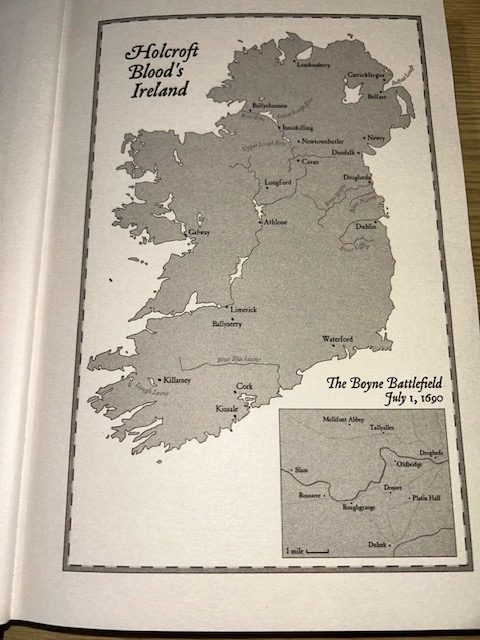
The next morning, just before dawn, Williamite troops were in sight on the ridge above the northern bank of the Boyne. And James saw the dust of thousands of enemy troops heading to the west along the road. The Stuart King, believing this to be a much larger force than it truly was, gave orders for a large part of his own army, including some of his finest (French) troops to head west to stop the Williamites getting behind him.
This was a grave error. In fact, William had only initially sent 7,000 men to the west, although he later sent more. By trying to counter it, James fatally weakened his own centre at the hamlet of Oldbridge.
At nine o’clock, the English artillery (on William’s right flank, just above the ford over the Boyne at Oldbridge) opened up; my distant cousin Captain Holcroft Blood commanding some of the big guns. The barrage lasted for an hour and destroyed Oldbridge and, while the dazed and battered Irish defenders were still coming to their senses, William sent in his elite Blue Guards to capture the ruins.
The Dutch Blue Guards marched across the ford in the Boyne in a slow, tramping column, into the furious musket fire of the surviving Irishmen. The Dutch casualties at the ford were horrendous, but the Blue Guard kept on advancing, magnificently disciplined, and eventually they took Oldbridge after an hour or so of brutal hand-to-hand fighting.
Further east, other contingents of William’s army, Englishmen, Danes and Huguenots, were also crossing the shallow river. And despite a courageous defence all along the line, and notable gallantry by the Jacobite cavalry, who attacked the oncoming Williamite hordes again and again, the Irish were overwhelmed everywhere and forced to pull back.
Over in the west of the battlefield, at a place called Roughgrange, the two sides found themselves separated by a deep, impassable ravine – and French troops stared at English redcoats without firing a single shot.
When James, at Roughgrange, heard that William’s men had crossed the Boyne in many places, he gave the order to retreat to Dublin. At a narrow bridge over the River Nanny at Duleek, about five miles south of Oldbridge, which soon became a dangerous bottleneck, the French infantry rearguard formed up and bravely fended off the English cavalry long enough for the bulk of James’s beaten army to escape to the south.
The Battle of the Boyne was over. But thanks to the escape of the majority of James’s army, the Irish were able to fight on for another fifteen months, during which several major battles were fought. At last, the defiant Irish rebels finally surrendered and signed the Treaty of Limerick in October 1691. Many of the troops were allowed to leave Ireland and go into exile in France, an episode known to history as the Flight of the Wild Geese.
The war in Ireland was not ended at the Boyne, as I had assumed, not by a long chalk, but it was certainly over for James Stuart. He fled back to the protection of Louis XIV in the days immediately after the battle – earning himself the derisive Gaelic nickname of Séamus an Chaca among the troops he deserted, which means “James the Shit”.
James II never again attempted to win the thrones of the Three Kingdoms by force of arms. But the Stuart cause was not dead: his son, James, the Old Pretender, made another attempt in 1715, and his grandson Bonnie Prince Charlie, too, brought rebellion to Britain in 1745.
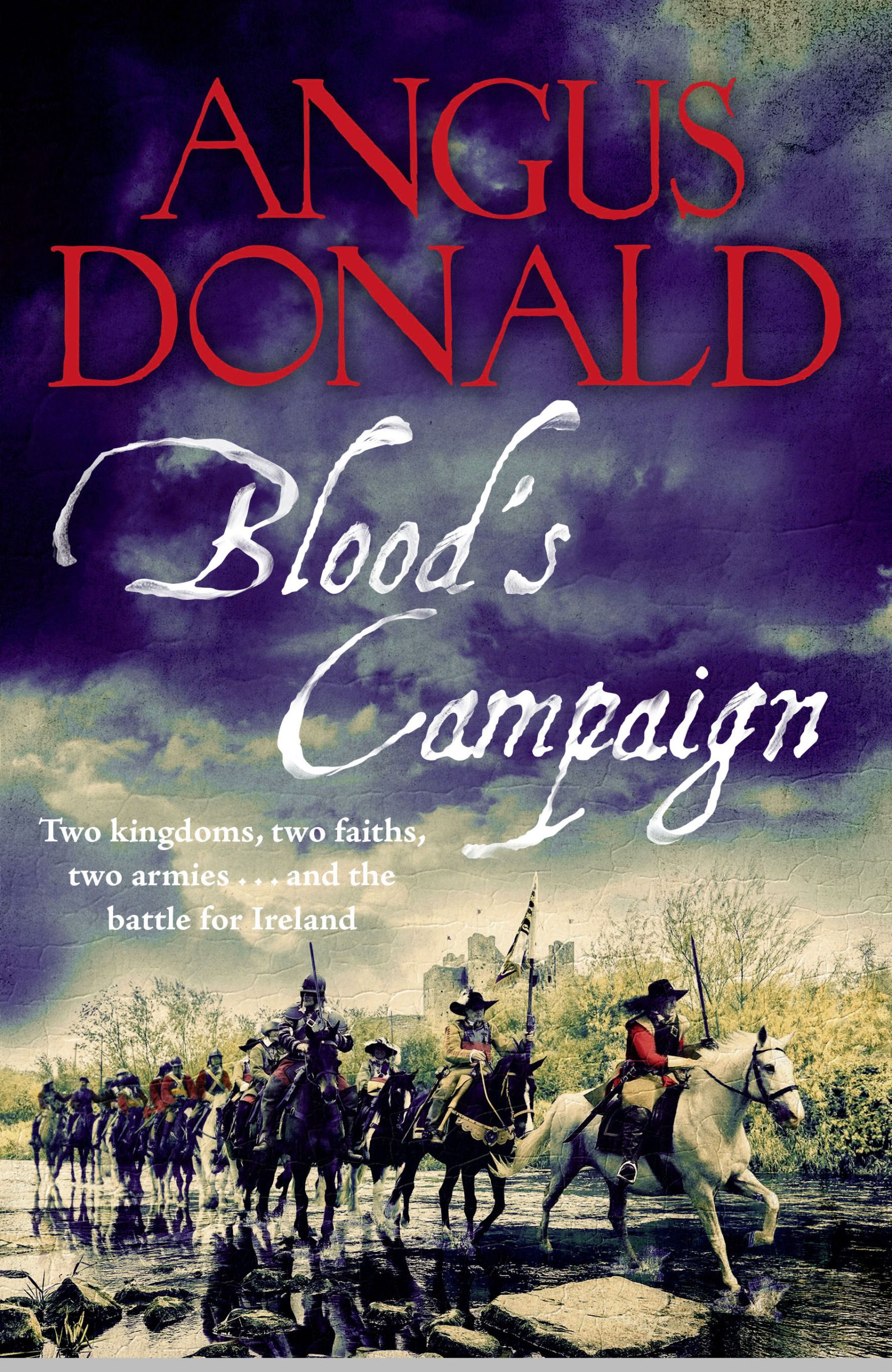
So the bloody fight at the River Boyne was not at all the battle I had thought it was all those years ago. But it was, nonetheless, a fascinating and moving slice of history to get to grips with as a novelist, and I hope I have done justice to the sacrifice of so many brave men – on both sides – in Blood’s Campaign.
And I cannot argue that it was not a significant battle. For all those doughty Orangemen marching in the summer months, it is a powerful symbol of their identity, pride, culture and history. And we disdain these cherished cultural symbols at our peril.
Blood’s Campaign is available from Amazon in eBook, hardback, paperback and audio versions.
Comments (0)