10 things you (probably) didn’t know about the Holy Grail
As many of you will know, I’m writing Robin Hood and the Holy Grail just now, the last novel in the Outlaw Chronicles, which is out this summer. So I thought I would take a moment to tell you a few interesting things I have discovered about the Grail during my research. Hopefully many of them will be new to you.
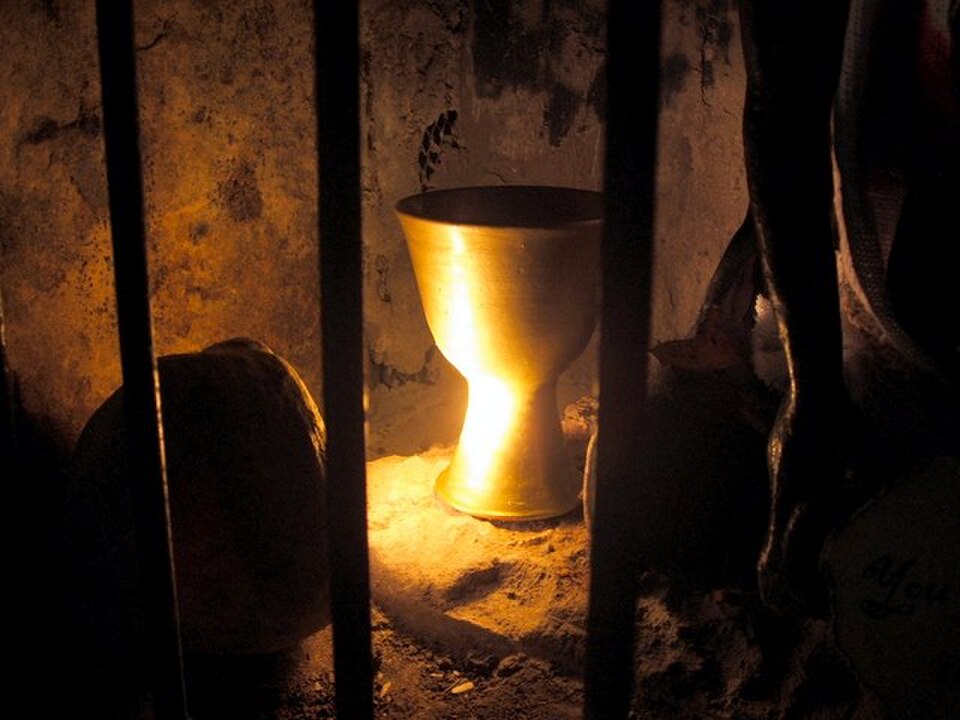
- The Holy Grail is the original MacGuffin, the object of value that sparks a quest or any complicated treasure hunt in a story. It is often either not found, or is destroyed at the end, or turns out to be something else. The Maltese Falcon from the film with Humphrey Bogart is a perfect example of a MacGuffin. In Indiana Jones and the Last Crusade the Holy Grail is the movie’s actual MacGuffin.
- The Holy Grail is not a cup. It is often described as the Cup of Christ, the communal wine vessel used at the Last Supper, when Jesus said “Drink this in remembrance of me.” It is also, bizarrely, said to be the same container that Joseph of Arimathea used to collect the Saviour’s blood as he was suffering on the cross. But the original word grail comes from the medieval Occitan word graal, which is a broad, shallow dish suitable for serving fish at the table, a bit like a modern soup bowl.
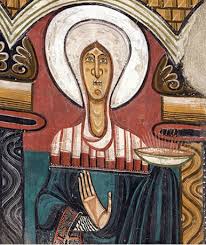
- The Grail first appeared in art at the beginning of the 12th century, painted on the inside walls of churches in the southern lands of Europe – in the Languedoc in France, northern Spain and northern Italy. It was usually held by the Virgin Mary (below) and sometimes it was a bowl, sometimes a cup, and sometimes it seems to be an oil lamp.
4. It was not until the latter part of the 12th-century that the Holy Grail made its literary debut. Perceval, Le Conte du Graal (Percival, The Story of the Grail) was written by the French poet Chretien de Troyes sometime between 1180 and 1190, sixty years or more after the graal was first pictured in church art. The story was an almost instant hit in European aristocratic circles. The Grail appears as a golden bowl encrusted with precious jewels, paraded about by mysterious denizens of a mysterious castle in the company of a shining lance, a pair of candlesticks and a silver carving platter.
5. In Chretien’s story the graal is a receptacle for the Host of the Eucharist, and such is its power that only one slender wafer of holy bread a day is enough to sustain the lord of the mysterious castle. Beyond that, Chretien does not say much about the Grail, and indeed his poem Le Conte du Graal was never finished. However, he spawned a whole genre of popular Grail stories that continues to this day. Even Robin Hood is trying to track down this prize in my forthcoming and final Outlaw Chronicles novel.
6. Robert de Boron, a Burgundian knight, wrote story called Joseph d’Arimathie ou Le grant estoire dou graal (Joseph of Arimathea or the Great History of the Grail), sometime in the 1190s. His take on the legend is the one that would be most recognisable to readers today, in that his Grail is both the cup used at the Last Supper and the vessel used to catch the blood of Christ on the cross. And, in about 1200, a Bavarian poet named Wolfram von Eschenbach produced an operatic retelling of Chretien de Troyes’s story called Parzival, embellishing the tale considerably, and conceiving of the grail as a precious stone (perhaps a meteor?) that had fallen from the sky.
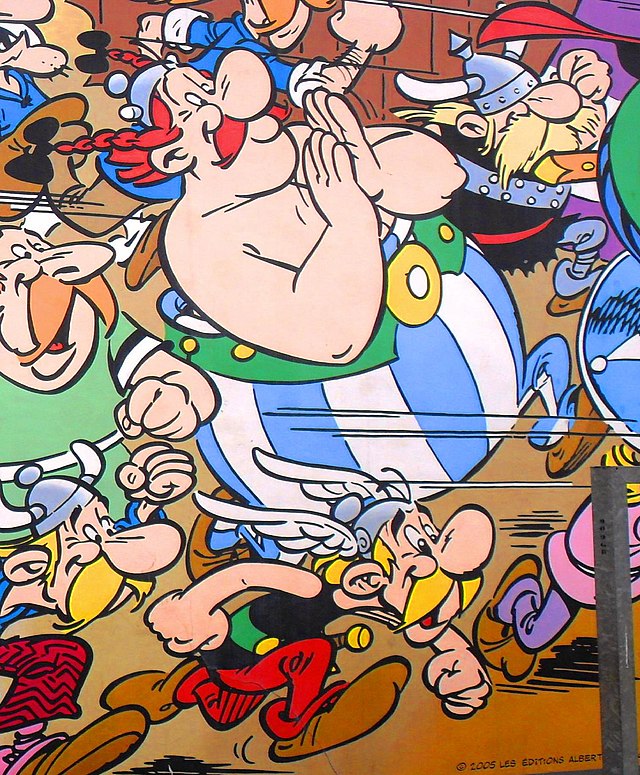
7. However, there are much earlier stories that echo Grail legends and could well be the origin of the medieval myth. The Celts of Western Europe had many stories about groups of warriors who go on quests in search of magic cauldrons. (Cf. Asterix and Obelix, and Getafix’s cauldron full of magic potion.) You can go back even further to Classical Antiquity and discover stories about the Horn of Plenty, the Cornucopia, a magical vessel that provides endless sustenance, a symbol of agricultural abundance.
8. The Grail might be a pictorial representation of the Virgin Mary’s womb. Christian dignitaries in medieval art are often identified by the symbols they hold. St Peter, for example, holds a set of keys to Heaven; St John has a book (the Bible) in hand; St Luke is pictured with a sacrificial ox. Mary is pictured holding a graal in some of the earliest artwork, containing a reddish substance, possibly blood, and radiating golden light. Some writers think it might represent the bloodline of Christ (see below) others say it represents the Virgin’s womb in which the baby Jesus was conceived by the Holy Spirit.
9. The Grail represents the bloodline of Jesus Christ. In the 1980s, I read a fascinating book called The Holy Blood and the Holy Grail by Michael Baigent, Richard Leigh, and Henry Lincoln, which claims that Jesus had children with Mary Magdalen and their bloodline continued to be venerated in France right up to the modern day. The novelist Dan Brown picked up on this in The Da Vinci Code. Fans of this theory say that the Holy Grail, is the “San Greal” in Occitan, which is a conflation of “Sang Real”, which means royal blood in French. And while most serious scholars now think this idea is spurious, at best, it had now firmly taken root in the popular imagination and the bloodline of Christ idea pops up regularly in fiction.
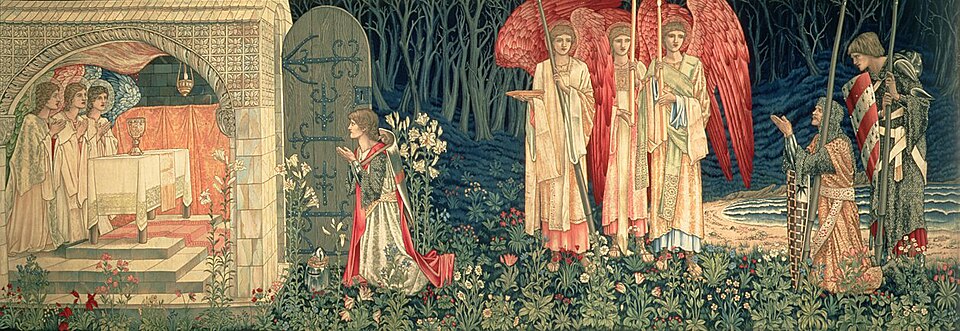
10. The Holy Grail might actually still exist. St Lorenzo Cathedral in Genoa possesses a green emerald bowl that it claims is the dish used at the Last Supper. And Valencia Cathedral’s Chapel of the Holy Grail also claims to possess the Cup of Christ. More intriguingly, there is a wooden statue of Mary holding the Grail, modelled on an early 12th-century church painting from the Pyrenees (above), which is housed in the Fogg Art Museum, at Harvard University. However, the Virgin’s left hand, which holds the holy vessel in the painting, has been cut off, and the statue’s wooden bowl has long been missing. Perhaps this artefact is, even now, kept locked tight in a secret Vatican archive, or in the vault of some tech billionaire.
If you want to read more about this fascinating subject, I thoroughly recommend Professor Joseph Goering’s The Virgin and the Grail: Origins of a Legend (Yale University Press, 2005). My own previous stories about the Grail – Warlord and Grail Knight – were published by Little, Brown some years ago. And a new story from me called Robin Hood and the Holy Grail will be out in the summer of 2026.
Comments (2)