You may be able to talk the talk in historical fiction . . . but should you?
English is a rich language with neologisms coined almost daily. But our past is also packed with terms that delight and amuse but which have fallen out of use. Who could not enjoy the 17th-century term “farting-crackers” for trousers? Or using the terms “arseworm” or “buffle-head” to insult an enemy? But while you might employ these word-treasures in your historical novel they need to be used sparingly.
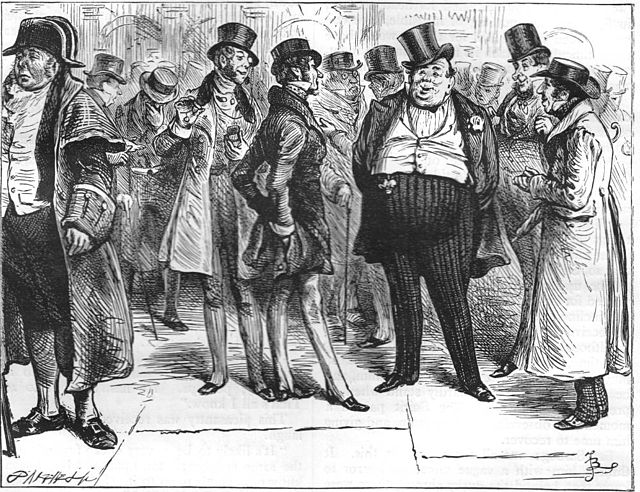
I’m contemplating writing a Victorian crime series set in London. Not immediately, I have two other novels to complete first (the final Robin Hood and the last Mongol one), which will eat up the rest of this year, but it’s likely that I’ll begin properly researching and writing it sometime in 2027.
One of the great attractions for me of writing fiction in this bygone era is the language that London criminals used. It has a special flavour all its own – and you can catch a glimpse of the underworld culture of the day through the slang – or “cant” as Victorian villains called it. You have “swell mobs”, who were gangs of confidence men (and women) who could pass as gentlefolk in polite society to rob their “toff” victims. “Snakesmen” were small children, aka “kinchen”, sent through narrow openings to unlock doors for thieves; and “crushers”, were the policemen who tries to catch them. A poultry thief was a “beak hunter,” a safe was a ‘“yegg”; “barking irons” were pistols; a “skyrocket” was a pocket. “Buzzing” or “dipping” was stealing items from that pocket.
Some of these slang words are still in use today – for example, “dipping”, “skyrocket” and “toff”.

I first became interested in historical criminal slang and the ever-changing use of the English language when I was writing Blood’s Game, a novel set in 1671 about the attempt by Colonel Thomas Blood to steal the Crown Jewels. The attempt failed and Blood was imprisoned in the Tower of London. In my research, I read a letter written by Blood to King Charles II, begging for mercy in which he claims that he was paid by officials of Charles’s own government to undertake the robbery:
“May it please your majesty: may this tell and inform you that it was Sir Thomas Osborne and Sir Thomas Lyttleton, both your treasurers of your Navy, that set me to steal your crown, but he that feeds me with money was James Lyttelton esquire. ’Tis he that pays under the treasurers at your pay office. He is a very bold villainous fellow, a very rogue, for I and my companions have had many a £100 of your majesty’s money to encourage us on this attempt.”
You can hear Blood speaking in this letter, and listen to the rhythms of his language – note the use of the now archaic double-verb structure “tell and inform”, which only now exists in legal-speak such as “cease and desist”; and his use of “very” as an adjective, rather than the modern adverb, in “a very rogue”.
When I was putting words into Blood’s mouth, as every author of fiction must, I tried to keep in mind the actual words he wrote or was recorded as saying. For example, when captured after the attempt on the Crown Jewels, Blood said: “It was a gallant attempt, however unsuccessful! ’Twas for a crown!”
He had a bombastic, self-congratulatory style of speech. He is commenting on his own actions, praising himself for his dashing style even after repeated failure. I found that he reminded me of Del Boy Trotter from the classic sitcom Only Fools and Horses. Del Boy, when he tries and tries and always seems to fail, repeats the phrase: “This time next year, Rodney, we’ll be millionaires.” And I tried to capture a flavour of that ill-founded perpetual optimism in Blood’s favourite and oft repeated expression in the book: “Keep the faith, my son, and we’ll all come up smiling yet.”
A historical writer can never truly capture the authentic speech patterns of the day. The past is a different country, as the novelist L. P. Hartley wisely pointed out. The really do do and say things differently there. And quite often we wouldn’t approve of it.
Take attitudes to race, as the most glaring example, and use of the N-word. A hundred and fifty years ago, quite ordinary decent people frequently used the word to describe another group of people. Now, as we all know, it is utterly taboo, at least for non-rappers, and using it marks you out as a monstrous racist. Yet the late, great George MacDonald-Fraser used the N-word liberally in his brilliant Flashman books.
The N-word was common during the Victorian era and he was attempting honestly to replicate authentically the speech of the time. But GMF received a huge amount of abuse for using the term in his work, particularly in the latter part of his life, and there are still calls to burn his superb historical novels. And, today, I would not choose to use it, even if it might be absolutely historically accurate.
The truth is that we don’t want absolute authenticity in our historical fiction – in either speech or actions. We prefer likeable characters, ones we can relate to. And in order to relate to them they have to share our values and think and speak similarly to us. So there is already a distortion at work when you, a 21st-century person, are creating a fictional historical person and putting your words in their mouth, you are consciously, or sometimes unconsciously changing them to make them more like you.
Having said that, the art of writing good dialogue in historical fiction is to give the illusion of historical authenticity, while at the same time allowing the character to reveal qualities that the reader can get behind. Bigotry is a big no-no, unless that character is a baddie. But your fictional people can’t be too politically correct either. I aim for a certain amount of well-meaning parochiality. Or, sometimes, just having the hero aware of the more unpleasant attitudes of the day but defying them.
You also don’t want them to speak too much like a modern person It’s not just a case of avoiding obviously crass terms like “OK” or “Nice one, mate” or “Cool”. I am frequently put off historical novels by the use of any glaringly modern language.

I was fortunate when writing Blood’s Game to come across a dictionary of slang for the period by someone calling themselves “B.E. Gent”. The dictionary was first published in 1699 and, while it has its limitations, it is an attempt to capture the authentic idiom of the 17th-century London underworld. And, I discovered that it is full of absolute gems, many of which I have incorporated into Blood’s Game.
A “dandyprat” is a little puny fellow; a “gage of fogus” is a pipe of tobacco; a “buffle-head” is an idiot; “farting-crackers” are trousers; an “arseworm” is a small, insignificant man; “clammed” means hungry; “chink” is money; to “nip” is to steal.

Essentially, writing successful period dialogue is a balancing act. You can’t have too many sentences such as: “Tip us a gage of fogus and I’ll cant about how I nipped the chink out of the old arseworm’s farting-crackers,” without seriously irritating the reader. So I mainly used these 17th-century slang terms in Blood’s Game as a kind of seasoning to give the book the flavour of the time. And, as a general rule of thumb, I tend to opt for simple language, and if two expressions present themselves, chose the one which is more old fashioned but still comprehensible to a modern reader.
If I do write a 19th-century crime series next year, and it is by no means certain at the moment, I will use the same linguistic yardstick I employed in Blood’s Game. I’ll be adding some unusual Victorian criminal slang for spice and authenticity but also always aiming for clarity and to avoid clunky irritating phrases.
Now it’s time for me to “sling my hook” or “tip my rags” as our dodgy 19th-century ancestors might have said, but I expect you can tell that I am really looking forward to getting stuck into the research.
Blood’s Game is still available as a paperback and eBook from Amazon.
Comments (0)