Cathar catastrophe: the brief siege of Béziers
One of my readers recently lamented the lack of a historical note in my new novel, Robin Hood and the Heretic Prince, and the truth is that I forgot to add one in the rush to get it published. My bad. So, to rectify my mistake, I’m going to write a series of blogs on this site about the background research I did for the book for any readers who are curious about my process for writing this kind of historical novel.
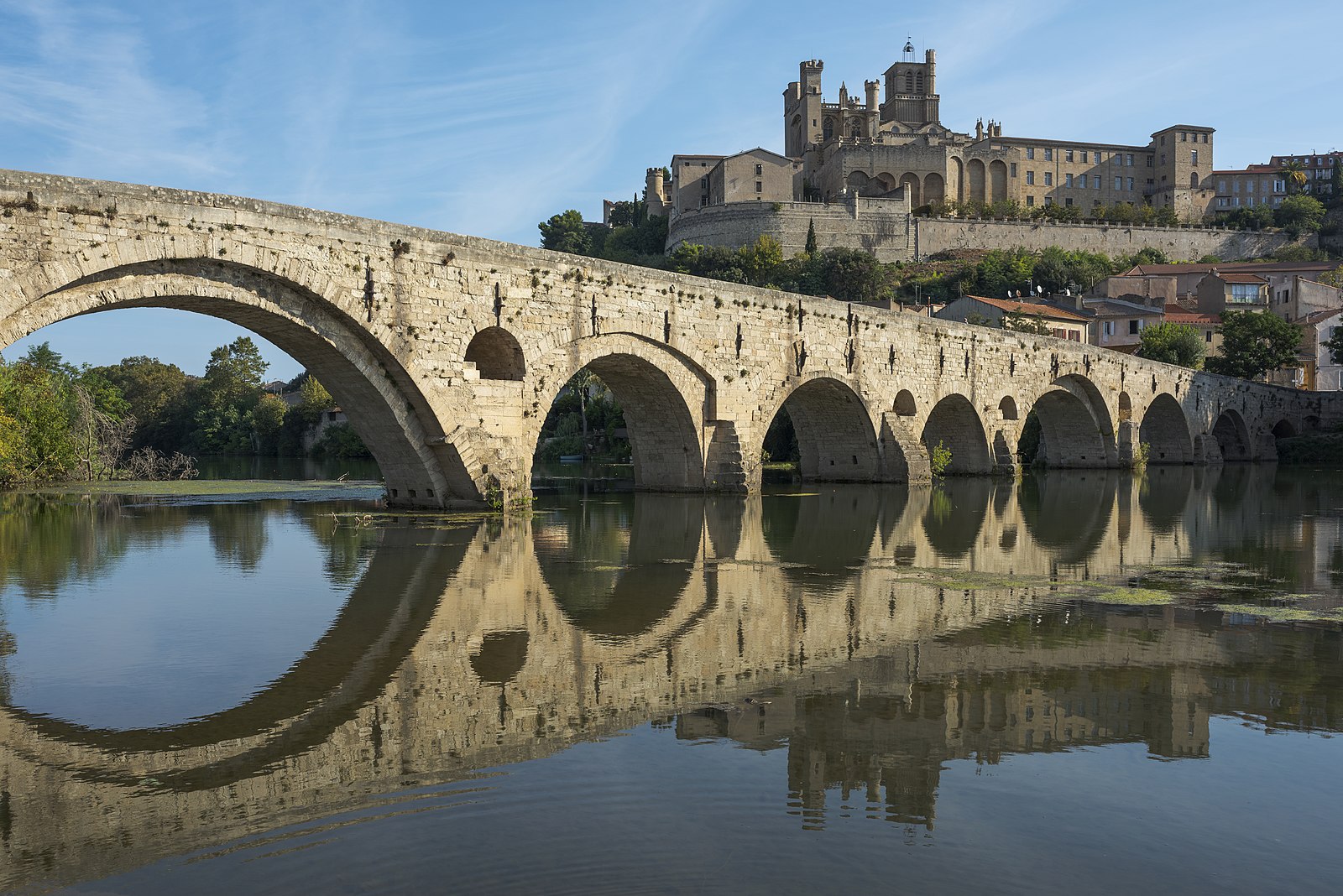
This is a picture of Béziers from the southwest, featuring the old bridge, where a very significant part of the action happens in Robin Hood and the Heretic Prince. Above it is the Cathedral of St-Nazaire, and about two-thirds of the way along the picture from the right, and three quarters the way up, you can see a Christmas tree-like shape. That is approximately where Alan Dale’s post on the walls was in the novel.
So to the siege of Béziers. There will be spoilers aplenty, the main one is that the siege was brief – it lasted just one day between the crusader army arriving outside the walls to the fall and sack of the town. First, some background on the Albigensian Crusade, which was the reason why the town was besieged.
The Albigensian Crusade
At the beginning of the 13th century, what we now think of as France was actually a collection of many vastly different local regions, with different languages, customs and cultures. The dominant one in the north was the Kingdom of France, comprising the lands around Paris ruled over by Philip Augustus. They spoke a language (medieval French) sometimes called the Langue d’Oïl, to distinguish it from the Langue D’Oc, which was spoken in the bottom half of France. (Both Oïl and Oc mean Yes – which is now Oui.)
The Langue D’Oc, also became the name for the region, roughly south of Limoges and Lyons, which had developed a very different culture to the chilly North. The domain of the King of France had far more in common with Normandy and even England than the warmer southern regions. The South was the birthplace of courtoisie, a code of behaviour that spawned love poetry, romance stories, music, art and a kind of polite knightly behaviour that was sometimes called chivalry. It was, I think, a gentler, more relaxed culture, with different ways of inheriting property and, crucially, a different approach to religion.
People in both the North and South thought of themselves as Christians but while the North was in thrall to its powerful bishops and abbots, the South had a more laissez faire attitude to religious affairs. It was home to the Cathars, the so-called perfecti, who preached a different version of the Gospel of Christ. They saw the world in dualistic terms, Good and Evil, Spirit and Matter. The Cathars believed that God was concerned with matters spiritual, and the Devil matters of the flesh. Therefore to come closer to God, it was necessary to eschew the flesh – literally, in terms of eating meat – but also sex and marriage and other worldly things. The perfecti preached their own version of the Gospel – still based on the Bible but differing from the orthodoxy of the Catholic Church. And this was intolerable to the Church establishment of the North. Perfecti were venerated as genuinely holy people in the Languedoc, called Good Men and Good Women, and they seem to have had little or no structure to their religion, unlike the hierarchical Catholic Church, with its ascending order of gatekeepers the Kingdom of Heaven.
The temporal lords of the Languedoc were put under great pressure by the Catholic Church to control the Cathar heresy (as the Church thought of it) and expel the perfecti from their lands. But this was no simple matter: many family members of the southern nobility were Cathars, or even perfecti. Also, the South had no tradition of controlling what people believed. The Count of Toulouse, the greatest noble in the region, was excommunicated in 1208 by Pope Innocent III (below) for failing to expel local Cathars.
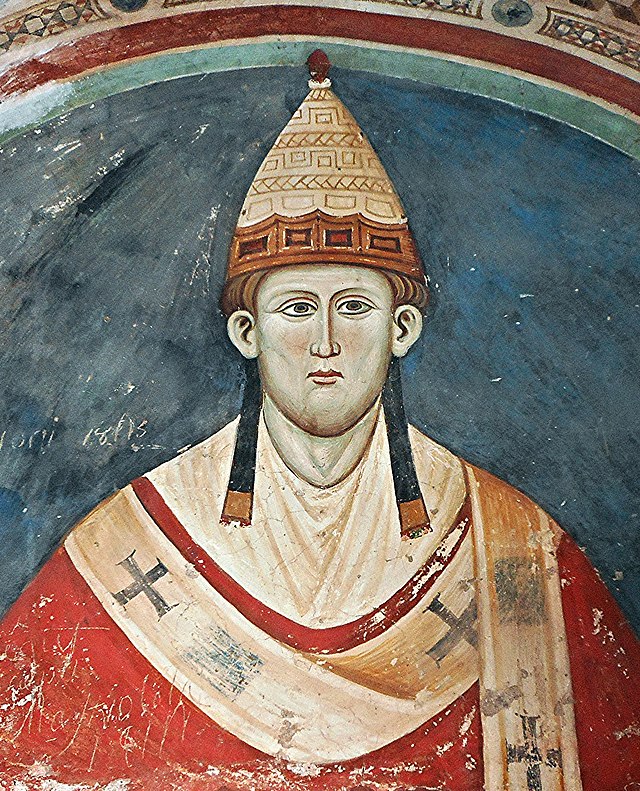
Eventually, the Church lost patience with the South and Pope Innocent called for a crusade against the lands of the Count of Toulouse and others. He declared a holy war on the Heretici Provinciales – the heretics of Provence (loosely meaning the South) – and, crucially, decreed that any knight who joined in the fight against heresy could appropriate any lands and property he captured from southern lords.
It was a licence from God Almighty to slaughter and steal. And if you died in battle on the crusade you automatically went to Heaven. Unsurprisingly, thousands of northern knights took the cross – literately sewing a simple cloth cross to their clothing to indicate the participation in this God-sanctioned war.
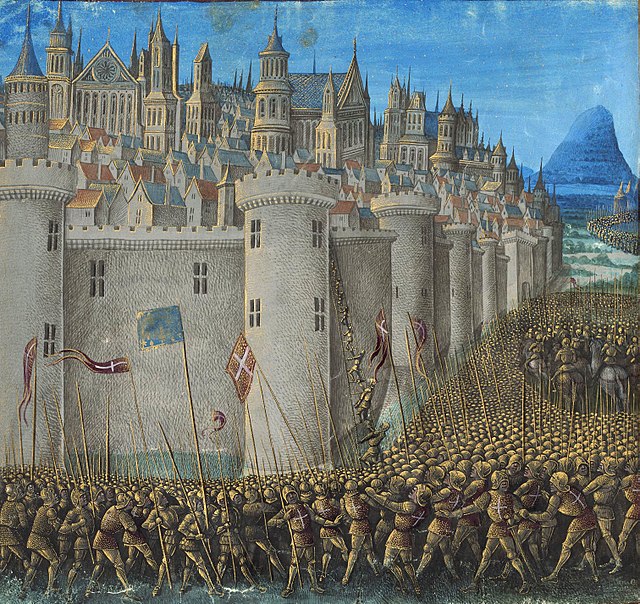
Perhaps as many as twenty thousand crusaders descended on the small town of Béziers in the unusually hot summer of 1209. The population of the town then was perhaps of a similar size. And they were defended by only a few hundred knights and men-at-arms. But Béziers was a castle, too, and had been built to defend itself. It had strong, high walls, an ample water supply, plenty of food and weapons, and they had had weeks to prepare for a siege. As well as that, many of the troops of the northern lords were feudal levies – who were only obliged to serve for 40 days before they would return to their farms and bring in the crops necessary for their families’ survival. There was a good chance, Raymond-Roger de Trencavel, the lord of Béziers believed, that, if they could hold out against the northern attackers for a few weeks, that the foe would disperse and all go home. So he left Béziers under a deputy and went off to prepare his other castle at Carcassonne.
The massacre at Béziers
The northern troops arrived on July 21, 1209, and quickly surrounded the castle. They were led by a fanatical churchman called Arnaud-Amalric, the Abbot of Cîteaux and the personal representative of the Pope. One section of his huge army began to set up camp in the western side of the River Orb (which was spanned by an old bridge, see picture at the top). As they were setting up camp, a group of youngsters from the castle came out on the gates and on to the bridge and began taunting them. These were boys, apprentices, servants, squires, adolescent would-be warriors. They aimed their insults at the ribaldi – camp servants and rascally hangers-on who followed every army, also teenagers but with a reputation among the crusaders for wildness, crude language and ribald behaviour. The two groups of teenager shouted insults at each other on the bridge, and then the ribaldi attacked the insulting young defenders on the bridge with tent poles, stones and knives. Very few of them, if any, were men-at-arms.
The ribaldi drove the defenders back to the gates of the town – which had been left open when the youngsters sallied forth. Then they followed the retreating defenders back inside the town. The crusaders on the far bank of the river, seeing what was happening, joined in the attack. And in a matter of minutes – very quickly anyway – the crusaders were inside the fortified walls and wreaking havoc.
What followed was truly horrific. The crusaders inside the town began killing everyone – men, women, children, and looting and burning every building, even the many churches. A large group of citizens, mostly women and children, tried to seek refuge in the cathedral-church of St-Nazaire, but the crusaders piled brushwood outside the walls and torched it, incinerating all the terrified people within. The leader of the crusaders, Arnaud-Amalric, when asked how the attackers could tell which people were Cathar heretics and which were good Christians, is supposed to have said: “Kill them all – God will know his own!”

That is probably an apocryphal story (although I have shamelessly used it in the Heretic Prince) but it neatly sums up the crusaders’ attitudes of the time. Béziers was razed to the ground and all its people slaughtered. Some twenty thousand souls were killed. It was a chilling start to the Albigensian crusade, which was to continue with great ferocity for many years, until the last of the Cathars were captured and burnt at the stake at Montségur in 1244 (this fortress features in my Robin Hood novel Grail Knight).
So that was the brief siege of Béziers. The crusaders arrived on July 21, 1209, and by July 22 all that was left off a lovely old town was a smoking ruin. You can read my fictional account of this terrible event in Robin Hood and the Heretic Prince. And I am planning to write a few more of these blogs explaining the background to my novel in due course. I am also planning, at some point, to continue the tale of the Albigensian Crusade in another Robin Hood story – maybe next year. But, for now, that’s all folks!
Comments (0)